
A splitter looks like a free upgrade. One plug goes in, two plugs come out, and the second fridge, compressor or light bar has somewhere to connect. What the splitter does not do is make more power. Everything on the output side still has to come through the one cable and the one fuse upstream of it.
This is the arithmetic to do before you add the second accessory, not after the first fuse blows.
A splitter shares a limit, it does not multiply it
Picture the supply as a pipe with a fixed bore. Splitting the end of it gives you two taps, but the pipe behind them is the same size. If each accessory draws 10 amps, the cable feeding the splitter carries 20. Any part of the run before the Y has to be good for the sum of the loads, not the biggest single load.
That includes the parts people forget: the plug at the battery end, the lug on the terminal, and the fuse. A heavy cable bolted to a light fuse holder is only as strong as the holder.
The fuse protects the cable, not the accessory
It is easy to think a fuse is there for the fridge. It is there for the wire. If something shorts, the cable can pass far more current than it can safely carry, and it heats along its whole length. The fuse is the part that gives way first so the cable does not.
- Fuse at the source. The fuse belongs as close to the power source as you can get it, so the whole length of cable is protected.
- Size it to the cable. A fuse larger than the cable can carry protects nothing. A fuse that matches the thinnest cable in the circuit is the usual rule.
- Branches need their own thought. If one leg of a Y is thinner than the trunk, a fault on that leg may not blow the fuse back at the battery.
Add up the real load, not the sticker
Take the running current of each accessory, not the peak at switch on. A compressor fridge pulls harder for a moment when the motor starts, then settles. Add the running figures, then leave headroom. A circuit that sits at its limit all day runs warm, and warm connectors age quickly.
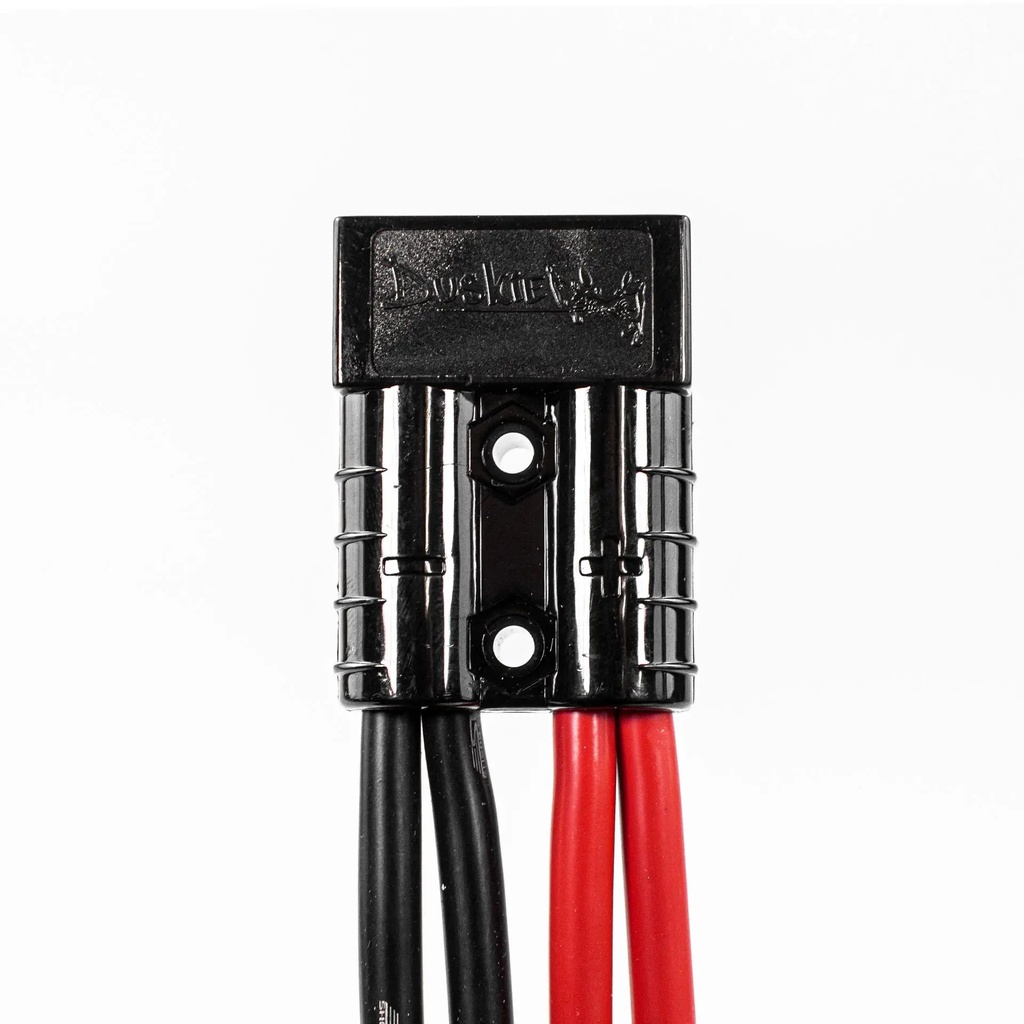 The junctionOne trunk in, two legs out.
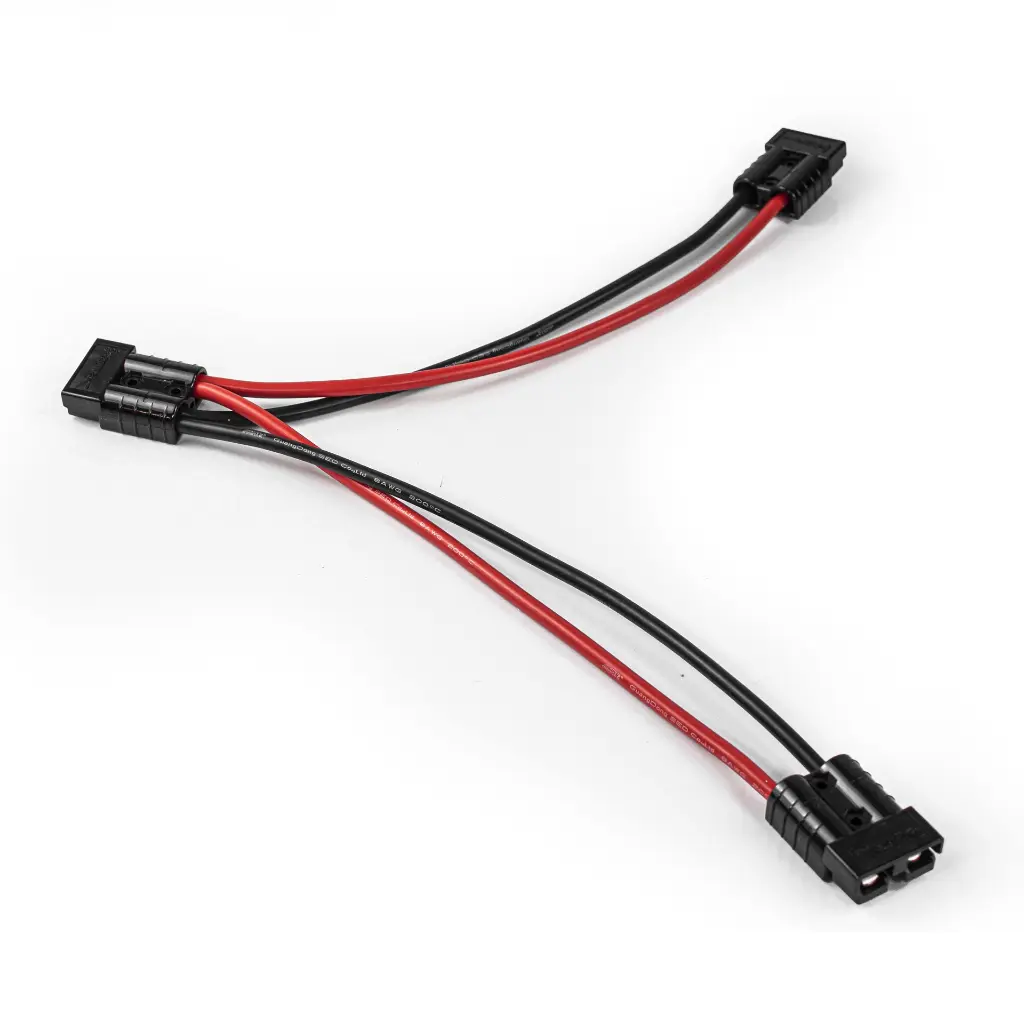 The splitBoth legs leave the same point.
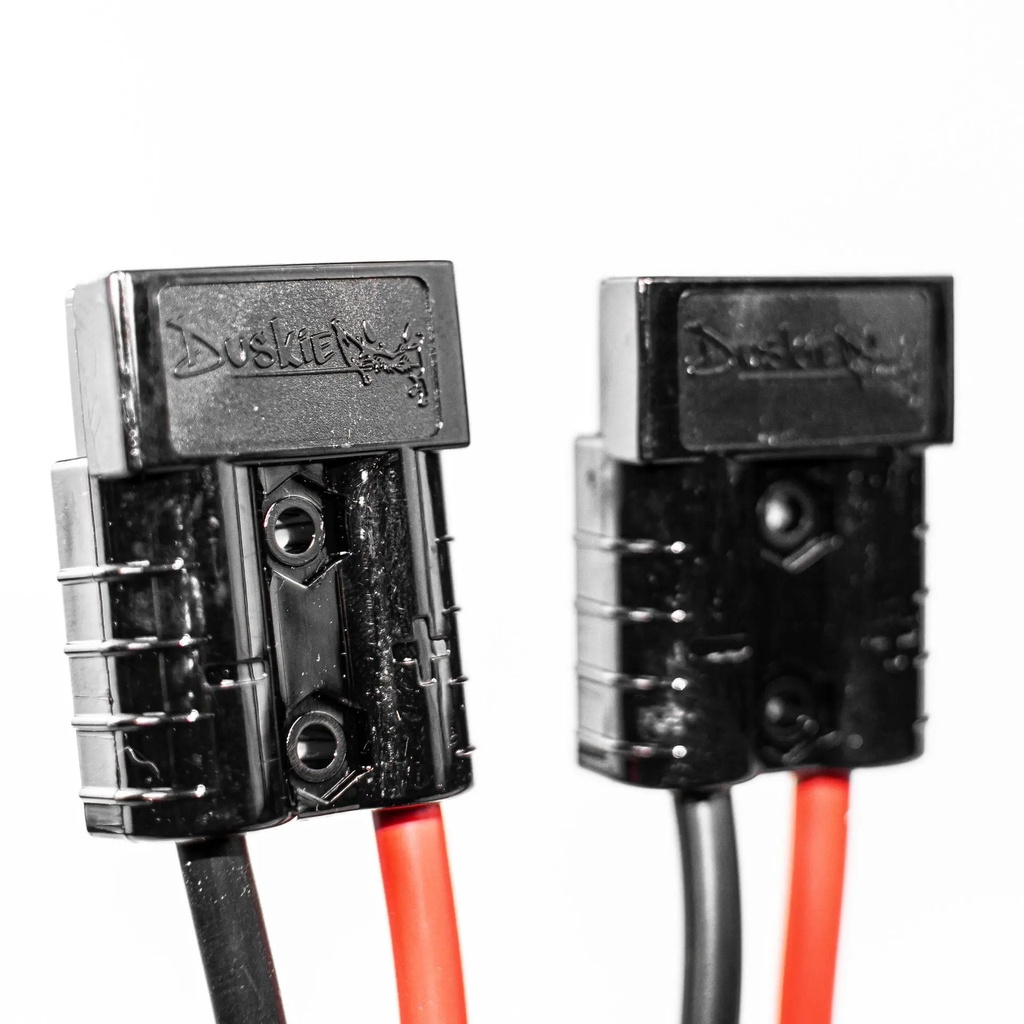 The plugsEach output is its own plug.
Length and gauge still matter
A short, thick splitter loses very little voltage. A long, thin one does not. If the accessories sit far from the battery, the volts you lose on the way count against both of them at once, because they share the trunk. The detail is in the voltage drop post, and the same logic applies to the plug ends, covered in the fridge lead plug post.
The best place for a splitter is close to the source, on short heavy cable, with the long runs split off after it. Putting the Y at the far end of a long lead gives you two thin runs where one thick one would do.
Where KEVIN fits
KEVIN is a Y splitter on 8AWG cable, 30cm long, with protective conduit over the cable. Its job is to connect two accessories to one point, or to bring two power sources together. The length is short on purpose. It sits near the source, which is where a splitter belongs, and it leaves the long runs to separate leads.
Treat it as one part of the circuit. Check the fuse upstream, check the load on each leg, and check that the plugs on both sides are rated for what you are putting through them.
A quick check before you plug in
- List every accessory on the splitter and its running current.
- Add them together and compare the total with the fuse.
- Confirm the fuse is no bigger than the thinnest cable in the circuit.
- Keep the splitter near the source and the long runs after it.
- After an hour under load, feel the plugs. Warm is a warning. Hot means stop.
Do that once and the splitter does what it is meant to do: put two accessories on one supply without asking the supply to be something it is not.